Brainrot Hide and Seek
- 3.4
- Rating
- 1.00M
- Installs
- Free
- Price

 Analysis by App-foxy
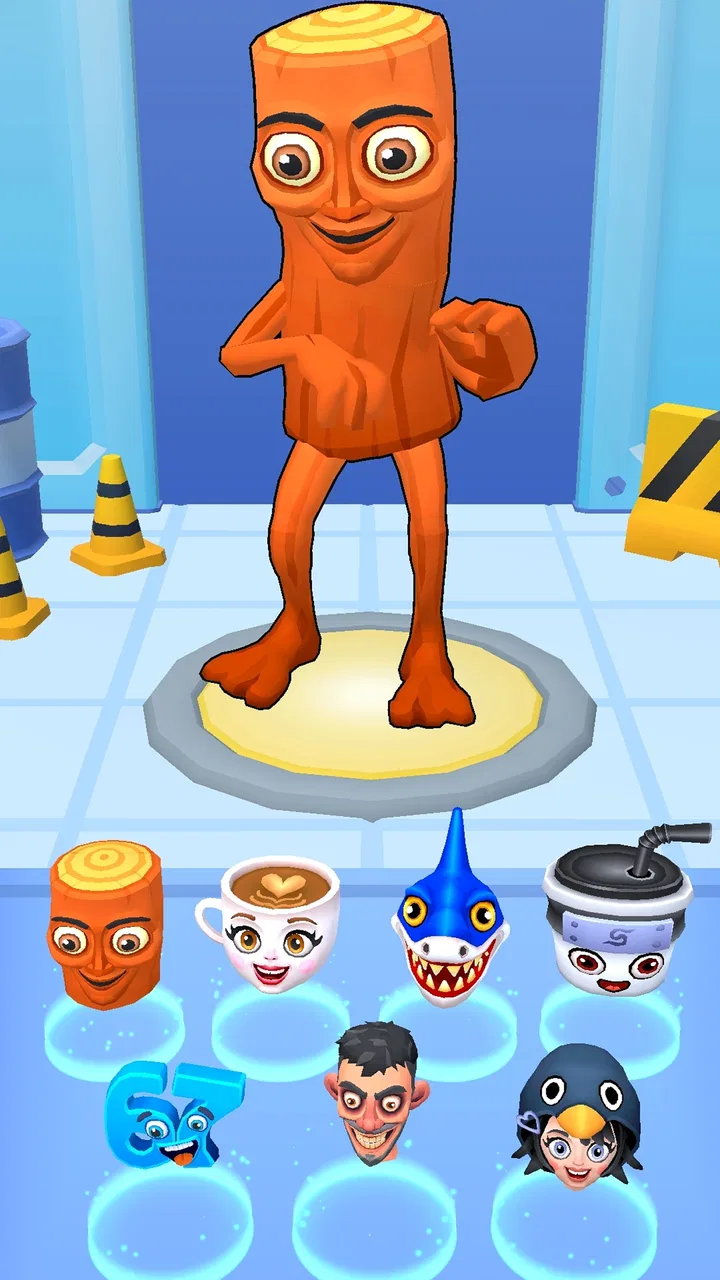
I went into Brainrot Hide and Seek expecting a quick joke-driven action game, but its appeal is less about a complicated rule set and more about how quickly it gets you into a playful chase. The central idea is familiar: create a hero, hide, seek, and react to the other side before the round slips away. What makes it distinctive is the Italian brainrot theme, which gives the otherwise recognizable hide-and-seek format a deliberately silly personality.
That simplicity is important. This is not the kind of game I would choose when I want a deep campaign, a long story, or a carefully layered combat system. I see it more as a lightweight game for short sessions, especially when I want something immediately understandable. The free entry point helps, while the Everyone age rating makes it approachable for a broad audience. At the same time, the modest scope means the game has to rely heavily on the quality of its moment-to-moment hiding and seeking rather than on a large collection of systems.
How the first sessions establish the goal
The first useful goal is simply learning how to survive the basic hide-and-seek loop. Creating a hero gives the game a small personal hook right away, even before there is any reason to think about long-term progression. I found that this works because the objective is easy to understand: make a choice, read the situation, and try to outplay the opposing side. There is no need to study a complicated tutorial before knowing what I am supposed to do.
You May Also Like

 Blood Strike: 2.5 Anniversary
Blood Strike’s Loadouts Turn Every Drop Into a Tactical Gamble
A close look at Blood Strike’s custom loadouts: how fast access to signature weapons reshapes its battle royale rhythm, rewards preparation, and narrows the gap between fights.

 Pandora - Music & Podcasts
Pandora’s Music Is Easy to Start, but Harder to Recover
Pandora’s strength is its low-effort path from a seed to a station. Its weak spot is how much confidence it asks you to place in connection, setup, and quiet recovery.

 8 Ball Pool
 Is Built on Rivalries, Rematches, and Routine
A close look at the rivalries, rematches, shared routines, and unanswered safety questions that turn a quick pool match into a persistent mobile community.

 Samsung Music
’s Quiet Strength Is Playing What You Already Own
Its reach comes less from spectacle than from dependable access to a personal library. That simplicity is both the app’s strongest retention engine and its ceiling.

 AccuWeather: Weather Radar
AccuWeather Review: A Quick, Clear Forecast for Everyday Decisions
For everyday plans, the best forecast is the one you can understand quickly. AccuWeather makes rain timing, radar, and local conditions easy to act on, with a few trade-offs.

 Hill Climb Racing
Why Hill Climb Racing Still Turns Crashes Into One More Run
A tiny car, a bumpy hill and one more upgrade: Hill Climb Racing keeps resurfacing because its simple chaos makes every near-miss feel personal.
More From Our News Desk
View All News


That clarity is one of the strongest parts of the design. A player can start with a very simple question: should I hide safely, search aggressively, or take a risk for a better position? Those decisions give the opening sessions more shape than the store summary alone suggests. The game does not need a large narrative introduction to create a reason to play one more round; the immediate challenge is enough to get started.
Still, players should set their expectations correctly. The hero-creation angle sounds as if it might lead to a large character-building system, but I would not approach it expecting the customization depth of a role-playing game. Its value is in making the experience feel like yours, not necessarily in creating a complex build with many strategic layers. That distinction matters for anyone choosing between this and a more substantial action title.
For a child or a casual player, the accessible premise is a real advantage. The action category can sometimes suggest demanding controls or constant fighting, but this game’s hide-and-seek foundation makes the experience easier to enter. I could imagine handing it to someone who enjoys funny characters and quick reactions but does not want to learn a large set of abilities.
Small goals matter more than a grand campaign
The early goals are best understood as short-term tests rather than chapters in a traditional adventure. I pay attention to where I can safely move, whether searching too quickly exposes me, and how much information I can gather before committing to a chase. That creates a practical learning process: each round teaches me to make a slightly better decision in the next one.
One useful habit is to avoid treating every round as a race. When I am seeking, rushing toward the first suspicious location can waste the advantage of observing the environment. When I am hiding, moving constantly can be just as dangerous as staying still if it makes my position easier to read. The game’s simple premise leaves room for this kind of self-imposed discipline, and that is where much of the challenge comes from.
Another helpful approach is to use the first few attempts as reconnaissance. Instead of trying to win immediately, I look for patterns in how the play space directs attention. Areas that seem obvious may attract the seeker first, while a less dramatic position can be safer. This is a concrete strength of the format: even without a complex progression tree, the player can improve through better judgment.
Progress signals, pacing, and the challenge curve
My main question with a game like this is what keeps the loop interesting after the novelty of the theme wears off. Brainrot Hide and Seek has a natural progress signal in the form of improved decisions. I notice that I am getting better when I stop relying on the same hiding idea, recognize danger earlier, and understand when a search is becoming too risky. That is satisfying, but it is also more personal than a clearly displayed campaign milestone.
This means the game will appeal most to people who enjoy performance-based improvement. If you need frequent unlocks, a visible story path, or a detailed reward structure to feel that you are moving forward, the experience may feel light. I would not recommend it to someone looking specifically for a progression-heavy action game. Its momentum comes from learning the loop and wanting to execute it better, not from a long list of achievements that I can safely assume will appear after every session.
The difficulty curve also seems tied to how seriously I take the basic rules. At first, the game feels approachable because hiding and seeking are familiar activities. Later, the challenge comes from avoiding predictable behavior. A player who always chooses the same kind of hiding spot or searches in the same order gives the opposing side an easy pattern to exploit. The curve therefore depends partly on the player becoming less obvious.
That is a good fit for short, repeatable play. I can finish a session feeling that I learned something without needing a large time commitment. However, it can also make the experience feel uneven for players who want a carefully staged escalation from easy to difficult. The game’s challenge is not only about stronger enemies or more complicated missions; it is about whether I can adapt my approach.
Why the theme helps, and where it can wear thin
The Italian brainrot style gives the game its strongest identity. The strange, comedic character concept makes ordinary hiding and searching feel more playful, and it helps the game stand apart from realistic stealth titles. I enjoy that contrast: the actions are easy to understand, while the presentation encourages me not to take every mistake too seriously.
There is a limit, though. If the theme is not already appealing to you, the core loop may feel too familiar to carry the whole experience for a long time. Players who prefer realistic tactical action, competitive shooters, or story-led adventures will probably find better depth elsewhere. This is a game I would recommend because of the combination of accessible hide-and-seek play and absurd character flavor, not because it replaces those larger genres.
The pacing is at its best when I treat it as a break between more demanding games. A realistic everyday use case would be a short wait before an appointment or a few minutes after finishing homework: I can open it, play around with positioning and reactions, and stop without needing to remember a complicated plot. It also works for sharing with a younger family member who likes silly characters and can understand the objective quickly.
For longer sessions, my enjoyment depends on whether I am actively trying to improve. I can keep the game engaging by changing how I hide, taking a more patient approach to seeking, and testing whether a familiar tactic still works. If I play passively and repeat one safe routine, the loop is more likely to lose its energy. That is an important trade-off: the game invites experimentation, but the player has to supply some of that variety.
Free access and the practical purchase question
The game is free to start, which makes trying the central idea straightforward. There are in-app purchases ranging from $3.99 to $28.99 per item, so I would approach spending carefully and decide first whether the basic loop is enjoyable on its own. For this type of game, purchases should not be the reason to install it; the hide-and-seek action needs to work for you before any optional spending feels worthwhile.
I also recommend giving the game a few focused sessions rather than judging it after a single round. The first attempt mostly tells me that the premise is simple. The more meaningful test is whether I enjoy adjusting my decisions after a mistake. If I find myself thinking about better routes, less obvious hiding choices, or more patient searches, there is probably enough here for casual repeat play. If I am waiting for a large reward system to appear, I may be looking for a different kind of game.
The current version is 0.4.12, and it runs on Android devices using version 6.0 or later. That makes compatibility reasonably broad for older supported phones, although actual comfort will still depend on the device’s screen, controls, and performance. I would use a stable connection and enough battery for a comfortable session, but I would not choose this game as my first option on a phone where touch input already feels cramped.
Its store presence shows a 3.9 average from 151 ratings, with 100K+ installs. I read those figures as signs of a real audience rather than proof that the game will suit everyone. The small number of written reviews means I would place more weight on the game’s premise and on my own response to the first sessions than on a few short comments. The developer is Hapix Games, and the release date is February 16, 2026, so the version and overall experience may continue to develop over time.
Who should play it and who should skip it
I would recommend this action game to players who like quick rounds, comic character concepts, and simple rules that leave room for personal tactics. It is especially suitable for someone who wants to make a hero and immediately test that character in a playful hiding-and-seeking setting. The Everyone rating also makes it a reasonable candidate for families looking for something less intense than a realistic combat game, while still giving the player a clear challenge.
I would be more cautious about recommending it to players who need a substantial solo adventure. There is no reason to expect the same kind of narrative investment as a campaign-based game, and the appeal is concentrated in the repeatable interaction. It is also not the best choice for someone who wants highly technical action controls, a serious competitive environment, or a progression system that constantly announces new milestones.
Compared with a standard hide-and-seek game, this version adds a stronger character and action-game identity. Compared with a typical action game, it is less about defeating opponents through a large combat toolkit and more about reading situations, choosing when to move, and avoiding predictable behavior. Compared with a casual collection of mini-games, it has a clearer central loop, but it may offer less variety if the hide-and-seek formula does not hold your attention.
My most practical advice is to play deliberately. In the seeker role, slow down when the obvious choice feels too tempting; in the hiding role, consider whether your first instinct is exactly what another player would expect. Keep changing your approach instead of repeating the same successful position. These habits turn a basic premise into a more thoughtful challenge and help reveal whether the game has staying power for you.
After spending time with it, I see Brainrot Hide and Seek as a focused, approachable action game rather than a full-scale progression experience. Its early goals are clear, its humor gives the format personality, and its challenge grows mainly through player awareness and adaptation. That is enough to support enjoyable short sessions, especially for fans of Italian brainrot-style characters.
My verdict is simple: try it if you want a free, easy-to-understand game built around playful hiding, seeking, and personal improvement. I would skip it if you are looking for deep unlocks, a long campaign, or serious combat depth. The game’s best quality is that it gets to its idea quickly; its biggest limitation is that the same focused idea must remain entertaining after the initial novelty fades.
FAQs for Brainrot Hide and Seek
01What is Brainrot Hide and Seek, and how does it work?
Brainrot Hide and Seek is an engaging multiplayer game available on Android and iOS. Players can either hide or seek in various themed environments. The aim is to outsmart your opponents using clever tactics and strategies. The game offers thrilling experiences with real-time interactions, ensuring endless fun and excitement.
02Is Brainrot Hide and Seek free to play, or does it require in-app purchases?
Brainrot Hide and Seek is free to download and play. However, it includes optional in-app purchases for skins, power-ups, and other in-game items. These purchases enhance gameplay but are not necessary to enjoy the core features of the game. Players can choose to explore these options for a more personalized experience.
03What are the system requirements to play Brainrot Hide and Seek?
For Android, Brainrot Hide and Seek requires Android 5.0 or higher, while iOS users need iOS 11.0 or later. It's recommended to have at least 2GB of RAM and a stable internet connection for smooth gameplay. Regular updates may require additional storage space, so ensure your device has sufficient capacity.
04Can I play Brainrot Hide and Seek offline?
No, Brainrot Hide and Seek is an online multiplayer game that requires an internet connection to play. This connectivity allows players to engage in real-time matches and enjoy the interactive elements that are integral to the game. Be sure to have a stable internet connection for the best experience.
05How does Brainrot Hide and Seek ensure fair play and prevent cheating?
The game employs robust anti-cheat measures and regular monitoring to maintain fair play. Developers continuously update the system to address any vulnerabilities. Players are encouraged to report any suspicious activity, ensuring a level playing field for everyone. This commitment to integrity enhances the overall gaming experience.
Pros
- Engaging gameplay mechanics.
- Colorful and intuitive interface.
- Smooth performance on devices.
- Multiplayer mode enhances fun.
- Frequent updates add new features.
Cons
- Ads can interrupt gameplay.
- Some levels feel repetitive.
- In-app purchases can be pricey.
- Requires constant internet connection.
- Limited character customization.

Brainrot Hide and Seek
Gallery